Vendor profile
Radware DefensePro: Architecture, Capabilities and Trade-offs
Last updated: August 2026 · Behavioural detection, broad single-unit span · Reading time ~12 min
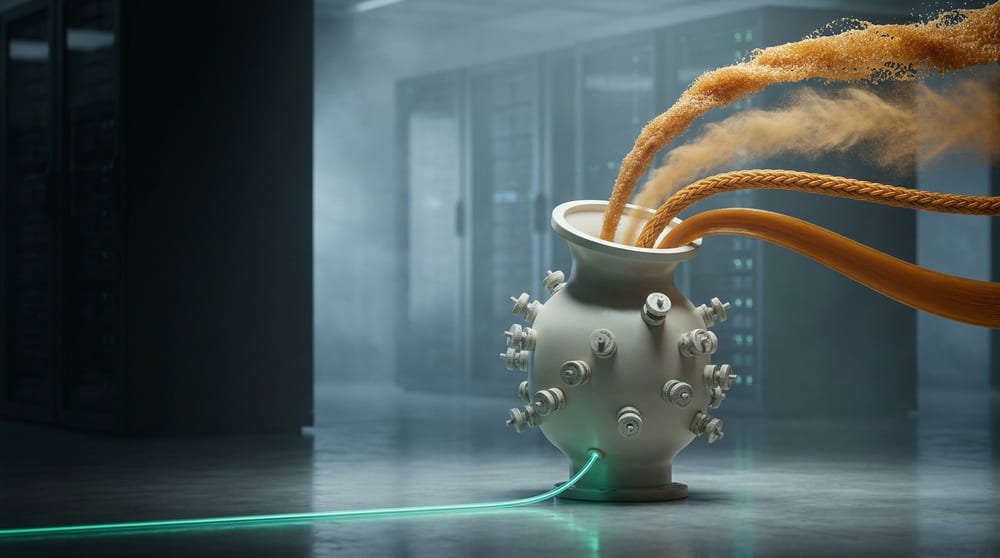
DefensePro is an on-premises mitigation appliance built around behavioural detection that generates real-time signatures for previously unseen patterns rather than waiting for hand-written rules. Its documented span is unusually broad for a single unit, from volumetric floods through to encrypted application-layer attacks, and it integrates with Radware's own cloud service for a single-vendor hybrid.
Best for: teams that will invest in tuning and want broad coverage in one unit
DefensePro is the appliance most often described as covering an unusually broad span in a single device, and that description is worth taking seriously in both directions: breadth in one unit removes an integration, and it concentrates the tuning burden in one place.
At a glance
| Appliance | Value | Evidence |
|---|---|---|
| Manufacturer | Radware | Vendor-stated |
| Category | On-premises appliance | Vendor-stated |
| Deployment | Inline; out-of-path modes not verified for this profile | Partly verified |
| Documented design centre | Behavioural detection with real-time signature generation | Vendor-stated |
| Own global scrubbing cloud | Yes — Radware operates its own cloud DDoS service | Vendor-stated |
| Published capacity figures | Not reproduced here — model-specific, check the current datasheet | Not verified for this profile |
| Best-fit environment | Teams that will invest in tuning and want breadth in one unit | Editorial inference |
Architecture
An on-premises appliance deployed in the traffic path, positioned by the manufacturer as covering volumetric floods through to encrypted application-layer attacks in the device itself Radware Defensepro. It integrates with Radware’s own cloud DDoS service, which makes a single-vendor hybrid available without a third-party integration.
Detection and classification
The stated design centre is behavioural: the appliance characterises normal traffic and generates real-time signatures for deviations rather than depending primarily on hand-maintained rules. This is the property that lets it act on a pattern that has not been named yet, and it is also the property that makes the learning window and baseline drift part of the operational model rather than a setup step.
Layer 3 and Layer 4 mitigation
Covered in the same unit as the application layer, which is the architectural claim that distinguishes this product from a decomposed edge-plus-ecosystem design. What that means for capacity under packet-rate stress is a datasheet question for the specific model.
Layer 7 mitigation
Application-layer coverage including encrypted traffic is part of the documented span. Encrypted inspection implies session termination, which in turn implies key handling — so for an entity with a data-residency obligation, this is where a technical capability becomes a jurisdictional question. Establish where termination happens and who holds the keys.
Capacity and packet-rate considerations
Not reproduced here. Capacity is model-specific and a family-level figure describes the largest model. Require the number for the quoted model, in packets per second at a stated packet size as well as in bits per second.
Multi-tenancy
Not verified for this profile. Service providers should ask for per-customer policy separation, per-customer reporting and tenant isolation behaviour against the quoted model.
HA, bypass and failure modes
Inline placement makes failure behaviour part of the availability design. Establish the bypass mechanism, whether it is hardware or software, the behaviour on power loss and on software fault, and the measured failover time.
Management and telemetry
Not verified in detail for this profile. The questions that matter are which export formats are available, what is retained locally, and whether an incident report can be assembled from data you hold rather than data you request.
Data and control-plane dependencies
A single-vendor hybrid means the on-premises tier and the cloud tier share a supplier and a contract. Establish what the appliance does independently when the cloud service is unavailable, and whether the commercial relationship can be separated if one tier needs to change.
Integrations
Integrates with Radware’s own cloud DDoS service. Third-party integration breadth is not verified for this profile.
Regional support
Not verified for this profile. Ask who answers out of hours, in which language, and under what response commitment in your specific market.
Licensing and TCO characteristics
Evaluate multi-year renewal economics rather than year-one pricing. The tuning investment that makes the platform perform is real work with real cost, and it is worth pricing explicitly rather than discovering it in the second year.
Strengths
Behavioural detection that does not depend on a pattern being named first. Unusually broad coverage in one device, which removes an integration. A single-vendor hybrid path for organisations that want one supplier across both tiers.
Limitations and unknowns
- Realising the depth takes operational investment; a thinly staffed team may not reach it.
- Encrypted application-layer inspection raises key-handling and residency questions that are specific to your jurisdiction.
- Deployment modes, multi-tenancy, telemetry detail, regional support and current model capacities were not verified for this profile.
- The official product page is served behind a browser check, so its technical detail could not be extracted programmatically here; take specifics from the current datasheet.
Best fit
Organisations that want breadth in a single unit and have, or will hire, the operational capacity to tune it — and those that specifically want one supplier across on-premises and cloud.
Poor fit
Thinly staffed teams looking for a set-and-forget appliance, and organisations whose architecture principle is deliberate supplier separation between the two tiers.
POC questions
- Run the learning period against your real traffic, then test at a genuine business peak rather than a quiet window.
- Measure the false-positive rate on replayed legitimate traffic, not only the blocked attack volume.
- Test an encrypted application-layer attack and establish exactly where termination happens and who holds the keys.
- Disconnect the cloud tier and repeat the same tests on the appliance alone.
- Test at small packet sizes and record the packet rate at which behaviour changes.
- Ask what the tuning you just performed is worth if you change product in year four.
Sources
Frequently asked questions
- What does behavioural detection mean here, concretely?
- It means the appliance builds a description of normal traffic and generates signatures for deviations in real time, rather than matching against a list written in advance. The practical consequence is that it can act on a pattern nobody has named yet, and that its quality depends on how well the baseline describes your traffic — which makes the learning period and the seasonality of your business part of the evaluation.
- Does the breadth in one unit come at a cost?
- The cost that teams report is operational rather than technical: realising the depth takes tuning, and tuning takes people who understand both the product and the traffic. That accumulated tuning is also what makes a renewal conversation asymmetric, because it does not transfer to a different product — which is exactly why it belongs in a five-year model rather than being treated as a sunk cost.
- How does the single-vendor hybrid change the trade?
- It simplifies operations and concentrates dependency. One supplier stands behind both the on-premises tier and the cloud tier, which removes an integration you would otherwise own and removes the failure-cause independence that having two suppliers provides. Neither is the right answer in general; the question is which risk your organisation would rather hold.
- What should a DefensePro incumbent establish before renewing?
- What the accumulated tuning is actually worth, and what the five-year renewal profile looks like against the alternatives. The [alternatives assessment](/radware-defensepro-alternatives/) works through the rest of the comparison.
Sources
- DefensePro — DDoS protection
Radware · vendor documentation · accessed 2026-08-15
Official product page. It is served behind a browser check, so its detail could not be extracted programmatically for this profile.
Published: August 2026 · Last reviewed: August 2026
Reviewed means the sources above were re-read on that date; the text is only reissued when something material changed.
This guide is updated as vendors release new models and pricing. How we compare vendors