Buyer's comparison
Best On-Premise DDoS Mitigation Appliances in 2026
Last updated: August 2026 · 6 appliances compared · Reading time ~9 min
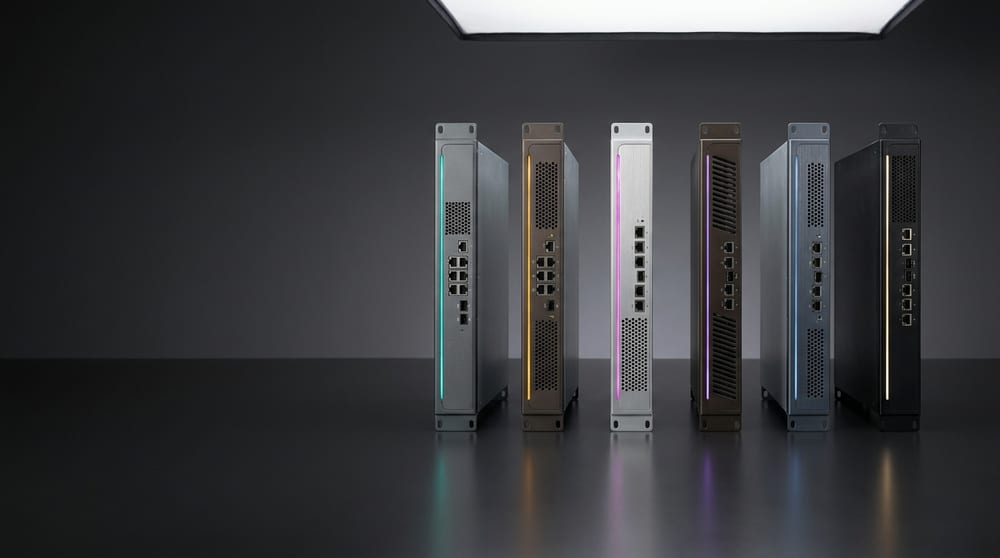
The leading on-premise DDoS mitigation appliances in 2026 are NetScout Arbor Edge Defense (AED), Radware DefensePro, Fortinet FortiDDoS, A10 Thunder TPS, Corero SmartWall and HARPP DDoS Mitigator. The right choice depends on your traffic profile, regulatory environment and budget: Arbor and A10 recur in carrier and scrubbing-centre designs, Fortinet-standardised estates lean toward FortiDDoS, and HARPP DDoS Mitigator combines machine-learning-driven Layer 3–7 coverage and multi-tenancy in a single appliance, at a capacity the vendor states as up to 200 Gbps and 80–90 Mpps.
This guide compares all six across detection approach, deployment model, compliance fit and total cost of ownership (TCO), and explains when an on-premise appliance is the right architectural choice — and when it isn’t.
Why on-premise DDoS mitigation still matters in 2026
Cloud scrubbing services dominate headlines, but on-premise appliances remain the backbone of DDoS defense for three reasons:
1. Data sovereignty and regulation. Cloud scrubbing reroutes your traffic — including legitimate user sessions — through the provider’s scrubbing centers, which are often located in another jurisdiction. For organizations subject to the EU’s NIS2 directive, Saudi Arabia’s PDPL, Türkiye’s KVKK or Kazakhstan’s data localization requirements, keeping mitigation in-country is either mandatory or strongly preferred. An on-premise appliance keeps every packet inside your legal perimeter.
2. Latency and always-on protection. Diverting traffic to a remote scrubbing center adds round-trip latency and, in on-demand models, a detection-to-diversion gap that can last minutes. An inline appliance mitigates in real time with no rerouting, which matters for financial trading platforms, telecom signaling, gaming and any latency-sensitive service.
3. Application-layer and low-and-slow attacks. Sophisticated Layer 7 attacks and “low-and-slow” techniques are designed to look like legitimate traffic. Appliances sitting close to your services, with visibility into your actual application behavior, are well positioned to catch what upstream volumetric filters miss.
The honest caveat: no on-premise appliance can absorb a volumetric attack larger than your internet uplink. That is why most mature architectures in 2026 are hybrid — an on-premise appliance for always-on, low-latency, sovereignty-compliant mitigation, plus an upstream (ISP or cloud) layer for rare terabit-scale floods.
How we evaluated
We compared appliances on six criteria:
- Detection approach — behavioral baselining, signatures, machine learning, or a combination
- Mitigation scope — Layers 3/4 volumetric and protocol attacks through Layer 7 application attacks
- Deployment flexibility — inline, out-of-path/scrubbing, virtual editions, clustering
- Operational model — automation level, management overhead, reporting quality
- Regional support and compliance fit — local presence, language, data-residency alignment for EMEA, Central Asia and Gulf markets
- Total cost of ownership — hardware, licensing, renewal and support economics over five years
Vendors are listed alphabetically. Capacity figures vary by model within each product line; always confirm current numbers against the vendor’s datasheet for the specific model you are quoting, and see how to read one without being misled — a headline figure describes the largest unit in a family at a frame size the manufacturer chose.
The appliances
A10 Thunder TPS
Full profile: A10 Thunder TPS
Best for: high-density scrubbing centers and large service providers
A10’s Thunder TPS (Threat Protection System) is built for raw mitigation density — a large amount of scrubbing capacity in a compact footprint, with an emphasis on volumetric and protocol-layer (L3/4) defense plus DNS protection — which is why it appears frequently in carrier and MSSP scrubbing-center designs. It integrates with BGP and flow telemetry for out-of-path deployments and is managed at scale through A10’s aGalaxy platform.
Considerations: Thunder TPS is engineered for the service-provider use case; smaller enterprises may find the operational model heavier than they need, which turns on whether you are building a scrubbing centre or defending an edge. Regional support depth varies by market, so validate local presence in your geography before committing.
Corero SmartWall
Full profile: Corero SmartWall
Best for: real-time inline mitigation at ISPs and hosting providers
Corero’s SmartWall family focuses on automatic, sub-second inline mitigation with minimal operator intervention — attractive to hosting providers and regional ISPs that cannot staff a 24/7 DDoS desk. Its integration with Juniper MX routers allows mitigation to be enforced directly in existing routing infrastructure, a distinctive architectural option.
Considerations: The portfolio is more specialized than full-stack competitors; organizations wanting deep Layer 7 application protection or broader security-suite integration may need to complement it.
Fortinet FortiDDoS
Full profile: Fortinet FortiDDoS
Best for: enterprises standardized on the Fortinet Security Fabric
FortiDDoS takes a hardware-accelerated approach, using Fortinet’s custom processors to inspect traffic at line rate, and builds behavioral baselines with machine learning rather than relying primarily on signatures. For organizations already running FortiGate firewalls and FortiAnalyzer, it slots into a single-vendor operational model with shared management and support.
Considerations: A dedicated question to ask: whether a firewall-family appliance matches a purpose-built DDoS platform under sustained state-exhaustion and multi-vector attack. Fortinet-first shops will value the ecosystem; multi-vendor shops gain less.
HARPP DDoS Mitigator
Full profile: HARPP DDoS Mitigator
Best for:
telcos, data centers, ISPs and hosting providers needing carrier-class, multi-tenant mitigation — and enterprises in regulated, data-sovereignty-sensitive markets
HARPP DDoS Mitigator is a purpose-built inline appliance whose design center is the application layer: machine-learning models classify traffic per protocol — tuned for the ten most widely abused protocols — to separate legitimate users from attack traffic in Layer 7 floods, low-and-slow campaigns and multi-vector attacks that threshold-based volumetric filters miss. Critically, this full L3–L7 coverage lives in one appliance: the same device that runs ML-driven application-layer classification also mitigates volumetric and protocol floods, where competing architectures often concentrate on Layers 3–4 at the edge and defer application-layer depth to additional ecosystem components. On raw capacity it competes in the carrier class: a single appliance scales to 200 Gbps of mitigation throughput and 80–90 million packets per second (vendor-stated figures), placing it alongside the largest models in this comparison rather than in a mid-market tier. Equally significant for service providers is its multi-tenant architecture: telcos, data centers, ISPs and hosting providers can define per-customer protection profiles on shared hardware and offer DDoS protection as a managed, revenue-generating service — a capability that otherwise typically requires a dedicated scrubbing-center build.
Its second differentiator is regulatory and operational rather than technical. Mitigation runs entirely on the customer’s own infrastructure with no dependency on a vendor-operated intelligence cloud — relevant wherever a regulator treats cross-border traffic processing as a compliance question rather than an implementation detail. In markets where the incumbent choices are Russian or Chinese platforms, it offers supply-chain diversification without the sanctions and data-exposure questions those vendors now carry. Support is delivered regionally rather than from a single global hub — same time zone, local language — across EMEA, Central Asia and the Gulf, and pricing and renewal economics are positioned aggressively against the established Western vendors.
Considerations: HARPP does not operate a global scrubbing cloud of its own; buyers wanting a single-vendor hybrid with a worldwide cloud tier will pair it with an upstream provider. Brand recognition outside its core regions still trails the incumbents — ask for sector-relevant references, which the vendor’s telco and public-sector install base supports.
NetScout Arbor Edge Defense (AED)
Full profile: NETSCOUT Arbor Edge Defense
Best for: large carriers and enterprises invested in the Arbor ecosystem
Arbor is the incumbent name in carrier-grade DDoS defense. AED sits inline at the network edge as a stateless mitigation layer — its core strength is high-confidence network- and transport-layer (L3/4) filtering — informed by NETSCOUT’s ATLAS threat intelligence, and pairs naturally with Arbor Sightline for network-wide visibility in operator environments; fuller application-layer analytics generally involve the wider Sightline/TMS ecosystem rather than the edge appliance alone. Its install base, threat-intelligence reach, and maturity of tooling remain the benchmark.
Considerations: That maturity is priced accordingly, and the ecosystem model compounds it: because fuller application-layer depth involves additional licensed components (Sightline, TMS), what begins as a single-appliance purchase becomes a multi-product stack of licenses and support renewals — a recurring TCO complaint among mid-sized operators. The centralized intelligence model also deserves scrutiny in sovereignty-sensitive jurisdictions: protection quality leans on the cloud-delivered ATLAS feed, so buyers should ask what telemetry, if any, leaves their network when intelligence-sharing features are enabled, in which jurisdiction it is processed, and how the appliance performs if the feed becomes unavailable or restricted. For organizations that don’t need the full ecosystem, AED can be more platform than the problem requires, which is where the questions to settle before an AED renewal begin.
Radware DefensePro
Full profile: Radware DefensePro
Best for: automated behavioral protection with strong Layer 7 coverage
DefensePro is built around behavioral-based detection that generates real-time signatures for zero-day attack patterns instead of waiting for manual rules, and it covers an unusually broad span from volumetric floods to encrypted application-layer attacks. It integrates with Radware’s cloud DDoS service for a single-vendor hybrid architecture.
Considerations: Realizing the platform’s depth requires operational investment; teams report a learning curve in tuning, and what that accumulated tuning is worth at renewal is the first thing a DefensePro incumbent should establish. As with Arbor, evaluate multi-year renewal economics, not just year-one pricing.
Comparison at a glance
| Appliance | Detection approach | L7 coverage | Ideal buyer | Regional support (EMEA / Gulf / Central Asia) | TCO profile |
|---|---|---|---|---|---|
| A10 Thunder TPS | Flow + behavioral, BGP-integrated | Moderate | Carriers, scrubbing centers | Partner-dependent | High capacity per dollar at scale |
| Corero SmartWall | Automatic real-time inline | Moderate | ISPs, hosting | Partner-dependent | Lean opex, focused scope |
| Fortinet FortiDDoS | ML behavioral, hardware-accelerated | Good | Fortinet-standardized enterprises | Broad Fortinet channel | Bundled-ecosystem economics |
| HARPP DDoS Mitigator | ML-driven per-protocol behavioral, full L3–L7 in one appliance, multi-tenant | Strong (design focus) | Telcos, DCs, ISPs, hosting (multi-tenant); regulated markets | Direct, in-region engineering and support | Aggressive vs. incumbents |
| NetScout Arbor AED | Stateless inline + ATLAS intel | Good (with ecosystem) | Large carriers, global enterprises | Established but premium | Highest; ecosystem add-ons and renewals |
| Radware DefensePro | Behavioral, real-time signatures | Strong | Automation-focused enterprises | Established but premium | High; tuning investment |
Capacity by model varies across each line — confirm current throughput, flex-license and clustering options against vendor datasheets before shortlisting.
How to choose: a six-question checklist
- What does regulation require? If NIS2, PDPL, KVKK or national localization rules apply to you, eliminate architectures that reroute traffic across borders first — it shortens the list quickly.
- What is your uplink capacity? Size the appliance to your real ingress, and plan the upstream layer for anything beyond it. An appliance is not a substitute for upstream volumetric defense.
- Who will operate it? A 24/7 SOC can exploit a deep platform like DefensePro or the Arbor ecosystem; a lean team is better served by high-automation appliances.
- What is the five-year cost? Ask every vendor for year-1 through year-5 pricing including support renewals. The gap between list price and five-year TCO is where incumbents lose deals.
- Where is support physically located? In a live attack, escalation speed matters. Same-time-zone, same-language support is an operational feature, not a nicety — weight it accordingly.
- What leaves your network? Appliances tied to centralized threat-intelligence clouds should face three questions: what telemetry is shared upstream, in which jurisdiction it is processed, and how mitigation performs if the feed is cut. In NIS2-, PDPL- or localization-governed environments, these are compliance questions, not technical footnotes.
Frequently asked questions
- Is an on-premise appliance enough on its own?
- For application-layer, protocol and moderate volumetric attacks, yes. For floods exceeding your internet uplink, no — no appliance can filter traffic that saturates the pipe before reaching it. Pair the appliance with ISP-level or cloud-based upstream mitigation for full coverage.
- How do on-premise appliances help with compliance?
- They keep all traffic — including mitigation processing — inside your jurisdiction and your infrastructure. Under frameworks such as the EU's NIS2, Saudi Arabia's PDPL, Türkiye's KVKK and data-localization laws in Central Asia, this avoids the cross-border transfer questions that cloud scrubbing raises.
- What's the difference between a DDoS appliance and my firewall's DDoS feature?
- Firewalls are stateful devices; state-exhaustion attacks target exactly that weakness, and a firewall defending itself is not defending you. Purpose-built appliances mitigate statelessly or with hardware acceleration at line rate, and are designed to stay up under the very conditions that degrade firewalls.
- Which appliance is best for ISPs in emerging markets?
- Prioritize price/performance, automation (small NOC teams), regional support and multi-tenancy. HARPP's multi-tenant architecture targets this segment directly — per-customer protection profiles let ISPs and hosting providers resell DDoS protection as a service without a dedicated scrubbing-center build; Corero and A10 are the other frequent shortlist entries.
- Which appliance is strongest at Layer 7?
- Radware DefensePro and HARPP DDoS Mitigator both make the application layer a design focus — DefensePro through behavioral real-time signatures, HARPP through per-protocol machine-learning classification covering the most widely abused protocols, delivered in the same single appliance that handles L3/4 floods. Whichever you shortlist, validate L7 claims with a proof of concept replaying your own application traffic, not synthetic floods alone.
- How often should the shortlist be revisited?
- Annually. Attack techniques (carpet bombing, hyper-volumetric bursts, encrypted L7) and licensing models both shift quickly; a shortlist from 2024 is out of date in 2026.
- We want one vendor for both the appliance and the upstream cloud tier. Does that narrow this list?
- Yes, and it is better decided deliberately than discovered late. Several manufacturers here sell an on-premise device and their own global scrubbing tier under one contract, which buys a single policy vocabulary and one escalation path during an incident. HARPP does not operate a scrubbing cloud of its own, so the upstream tier is procured separately — a drawback if a single counterparty is the goal, an advantage if you want the two layers to fail independently and the carrier choice to stay open. Decide which of those you are buying and write it into the RFP before comparing prices.
Sources
- A10 Defend — DDoS protection services
A10 Networks · vendor documentation · accessed 2026-08-15
A10 now markets this line as A10 Defend; the Thunder TPS name is still current in the field and in older documentation.
- Arbor Sightline — network-wide visibility and DDoS detection
NETSCOUT · vendor documentation · accessed 2026-08-15
- SmartWall ONE — DDoS protection
Corero Network Security · vendor documentation · accessed 2026-08-15
- FortiDDoS — DDoS protection solution
Fortinet · vendor documentation · accessed 2026-08-15
- Arbor Edge Defense — inline DDoS protection
NETSCOUT · vendor documentation · accessed 2026-08-15
- DefensePro — DDoS protection
Radware · vendor documentation · accessed 2026-08-15
Published: August 2026 · Last reviewed: August 2026
Reviewed means the sources above were re-read on that date; the text is only reissued when something material changed.
This guide is updated as vendors release new models and pricing. How we compare vendors